
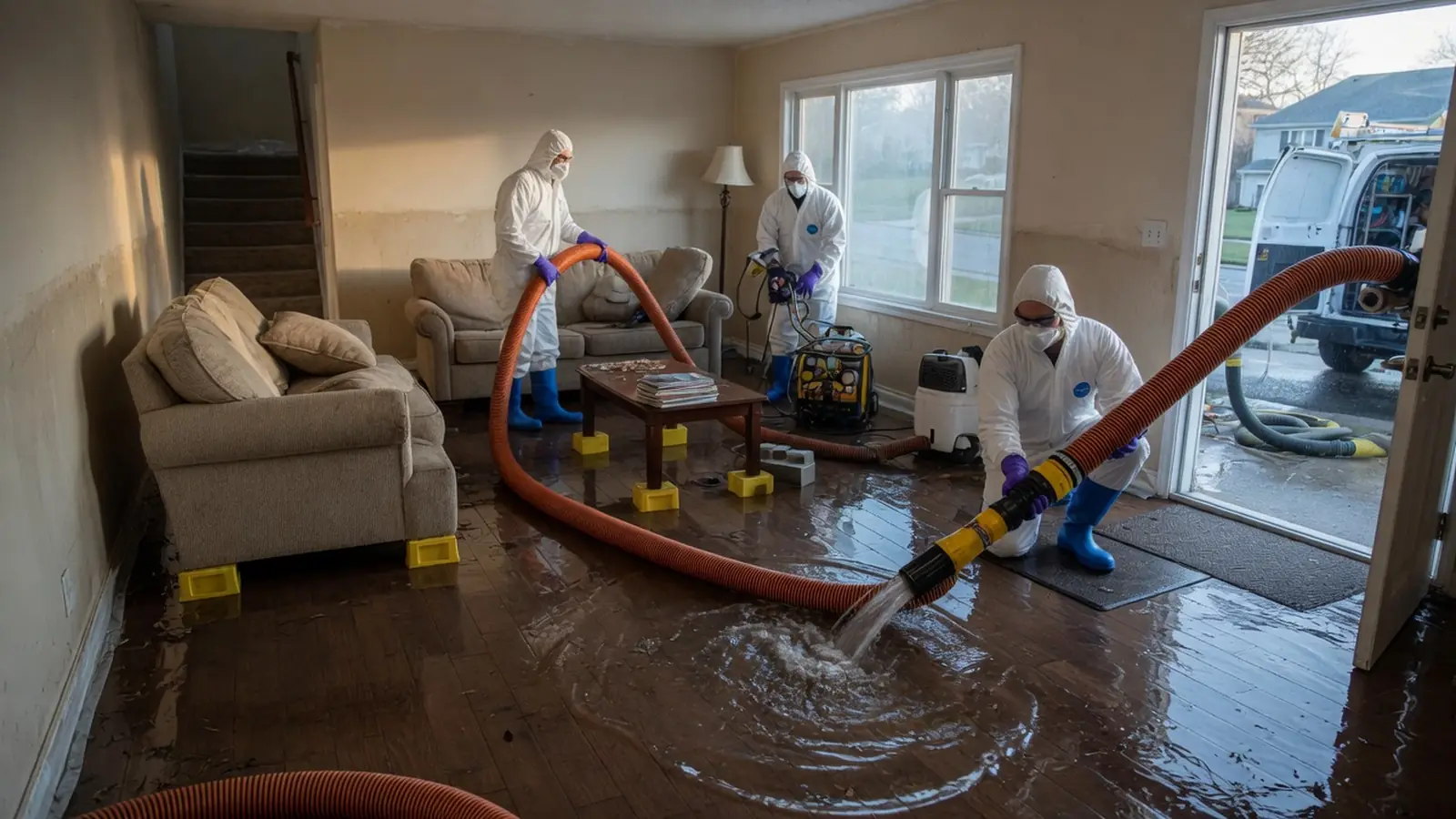
Emergency Water Damage Restoration Waco TX
Severe spring thunderstorms frequently drive wind-blown rain beneath roof decking and vinyl soffits, creating hidden ceiling cavity moisture pockets that go undetected until drywall sags. Our certified emergency extraction crew deploys immediate industrial pumping, thermal moisture probing, and negative-pressure drying across all affected rooms. We halt progressive structural deterioration and secure residential envelopes day or night.
Water coming in right now? (254) 555-0145.
Prefer to talk? (254) 555-0145
Rapid Water Extraction And Structural Restoration
Our mitigation team brings decades of combined hands-on experience handling structural drying and catastrophic storm recovery.
When severe weather strikes, learn how our team stabilizes structural storm damage before moisture spreads.
Homeowners dealing with sudden storm damage struggle to find reliable local emergency restoration while avoiding predatory out-of-town contractors.
NOAA radar recorded 2,872 hail signatures within about 15 miles locally between 2021-2025 (2021: 287, 2022: 357, 2023: 905, 2024: 934, 2025: 389).
The heaviest recent hail year around the area was 2024, with 934 radar hail signatures inside a 15-mile radius.
About 28% of housing units locally (16,473 of 59,427) were built before 1960, the era of galvanized steel supply lines and cast iron drains.
About 13% of housing units locally (7,726 of 59,427) were built in the 1960s, overlapping the years aluminium branch wiring was installed.
About 27% of housing units locally (15,864 of 59,427) were built in the 1970s and 1980s, overlapping the years polybutylene supply piping was commonly installed.
About 67% of housing units locally (40,063 of 59,427) were built before 1980, the period when asbestos-containing materials and lead paint were still in use.
Our crews use non-invasive thermal sensors and calibrated moisture meters to track water migration behind historical plaster and beneath modern subfloors.
Every project concludes with comprehensive air scrubbing and HEPA filtration to safeguard your indoor respiratory environment.
Our Four-Stage Structural Dryout Protocol
Our certified technicians execute rapid extraction and basement flood cleanup to halt secondary structural rot.
- Immediate Hazard Assessment & Moisture Mapping. The dominant mapped soils across the territory (TX309) by acreage are Wilson clay loam, 0 to 2 percent slopes; Houston Black clay, 1 to 3 percent slopes; Heiden clay, 1 to 3 percent slopes; Aledo gravelly clay loam, 1 to 8 percent slopes. The single most extensive soil unit mapped around the territory is Wilson clay loam, 0 to 2 percent slopes, covering about 42,381 acres of TX309, which creates severe hydrostatic pressure against foundation perimeters during sudden cloudbursts. We immediately survey moisture saturation levels with non-penetrating thermal cameras.
- Emergency Tarping, Board-Up & Water Extraction. Storm restoration begins with immediate roof tarping and window board-up to halt active water intrusion before structural drying equipment can maintain proper negative pressure indoors. Our technicians deploy high-capacity submersible extractors and truck-mounted units to pump thousands of gallons per hour from impacted living spaces.
- Industrial Dehumidification & Cavity Aeration. We position low-grain refrigerant dehumidifiers and high-velocity axial air movers to circulate dry air throughout wall cavities and floor assemblies. Condensation and poor attic ventilation lead to widespread fungal growth on roof sheathing, leaving homeowners unsure about high professional remediation estimates, so we establish balanced airflow to prevent fungal proliferation.
- Antimicrobial Treatment & Final Verification. Public discussions frequently highlight that persistent musty odors lingering after professional water extraction indicate hidden moisture pockets remaining trapped beneath flooring layers. We apply botanical antimicrobial sanitizers and verify dry standards using penetrating pin meters across all structural framing.
Certified Restorative Drying Standards
We adhere strictly to IICRC S500 standards for professional water damage restoration, ensuring every stud, sill plate, and joist reaches its dry baseline before equipment is removed. If moisture lingered in subflooring before mitigation, schedule certified fungal inspection and mold remediation to guarantee indoor air safety. Our technicians provide fully documented psychrometric drying logs and work collaboratively with your insurance adjuster from start to finish.
Storm Damage Roof Tarping & Board-Up
Storm restoration begins with immediate roof tarping and window board-up to halt active water intrusion before structural drying equipment can maintain proper negative pressure indoors. We seal breached building envelopes promptly against further rainfall.
Sump Pump Failure & Basement Water Removal
Basement flooding resulting from failed sump pumps during rainstorms forces homeowners to evaluate whether DIY water extraction can prevent mold development. Our industrial vacuum extractors remove deep water and sanitize porous concrete slabs thoroughly.
Structural Cavity Moisture Drying
Severe spring thunderstorms frequently drive wind-blown rain beneath roof decking and vinyl soffits, creating hidden ceiling cavity moisture pockets that go undetected until drywall sags. Persistent musty odors lingering after professional water extraction indicate hidden moisture pockets remaining trapped beneath flooring layers, which we eliminate with directed airflow.
Our Approach To Emergency Water Extraction
When water breaches your home, every minute counts toward preserving framing and preventing mold growth. We deploy calibrated psychrometric monitoring to ensure complete drying across all affected building materials.
- 10Zip Codes Served
- 6Service Areas
- 3Services Offered
Local property owners rely on our emergency crews for rapid moisture extraction, honest structural assessments, and compassionate on-site communication during major water losses.
“When floodwater seeped into our hallway, my ninety-year-old mother was panicked about the commotion. The crew carefully routed all drying ductwork along the baseboards so her walker had an unobstructed path through the living room. They even set up quiet containment barriers to keep our rescue dogs calm throughout the mitigation.”
Elena R.
“Another outfit offered a cheap quote but admitted they would merely set two box fans and leave without inspecting the subfloor. The team brought calibrated thermal imaging cameras and uncovered saturated insulation that would have rotted our floor joists. Spending a little more for their thorough structural dryout saved us thousands in repairs.”
Marcus G.
“Navigating municipal code requirements for our historic bungalow felt daunting after a major pipe burst flooded our crawlspace. The crew documented every moisture log accurately and liaised directly with the building inspector to ensure proper environmental clearances before reconstruction. Having that paperwork handled cleanly without code violations gave us complete peace of mind.”
Devon B.
“Our kitchen ceiling began gushing water at two in the morning on a Sunday after severe winds tore off roof flashing. The crew answered on the second ring and had emergency suction equipment operating in our home within forty-five minutes. Their prompt dispatch stopped the deluge before it compromised our electrical breaker panel.”
Chloe T.
Frequently Asked Questions
How quickly does rainwater penetrating an attic after severe storm roof puncture lead to structural ceiling collapse or secondary electrical hazards?
Rainwater penetrating an attic can weaken ceiling drywall within 24 hours and trigger dangerous electrical short circuits in under 12 hours. Saturated gypsum drywall loses structural integrity rapidly under insulation weight, causing catastrophic ceiling collapses while water running down interior wall studs threatens junction boxes and living space wiring.
How do local soil conditions impact water intrusion around home foundations?
Expansive clay soils like Wilson clay loam swell heavily when wet, trapping hydrostatic pressure against foundation walls and forcing water indoors. The dominant soil units across the county create substantial lateral loads during torrential storms, pushing moisture through micro-fissures in foundation masonry and basement walls if positive exterior perimeter grading is not maintained.
What safety precautions are required when mitigating water damage in homes built before 1980?
Older structures require cautious containment to prevent disturbing hazardous asbestos insulation, lead paint, and deteriorated wiring systems. With roughly 67% of regional homes built before 1980, emergency crews must test drywall joint compounds and flooring adhesives before destructive tear-outs, while simultaneously inspecting for fragile galvanized pipes and ungrounded wiring.
Can DIY water extraction effectively prevent mold after a major basement flood?
Shop vacuums remove surface standing water but cannot extract bound moisture trapped inside wall cavities before mold colonies germinate in 48 hours. When sump pumps fail during rainstorms, water quickly migrates into sill plates and wall cavities, demanding industrial desiccant dehumidifiers and high-velocity air movers operating under negative pressure to reach safe moisture equilibrium.
Why do musty odors persist in living spaces following structural water extraction?
Persistent musty odors signal hidden moisture trapped under subflooring layers, requiring industrial dehumidification under negative pressure. Even when surface floorboards feel dry, moisture pockets trapped between vapor barriers and subfloors foster microbial activity, requiring specialized floor-drying injection mats and antimicrobial treatments to fully eliminate odor-causing bacteria.