
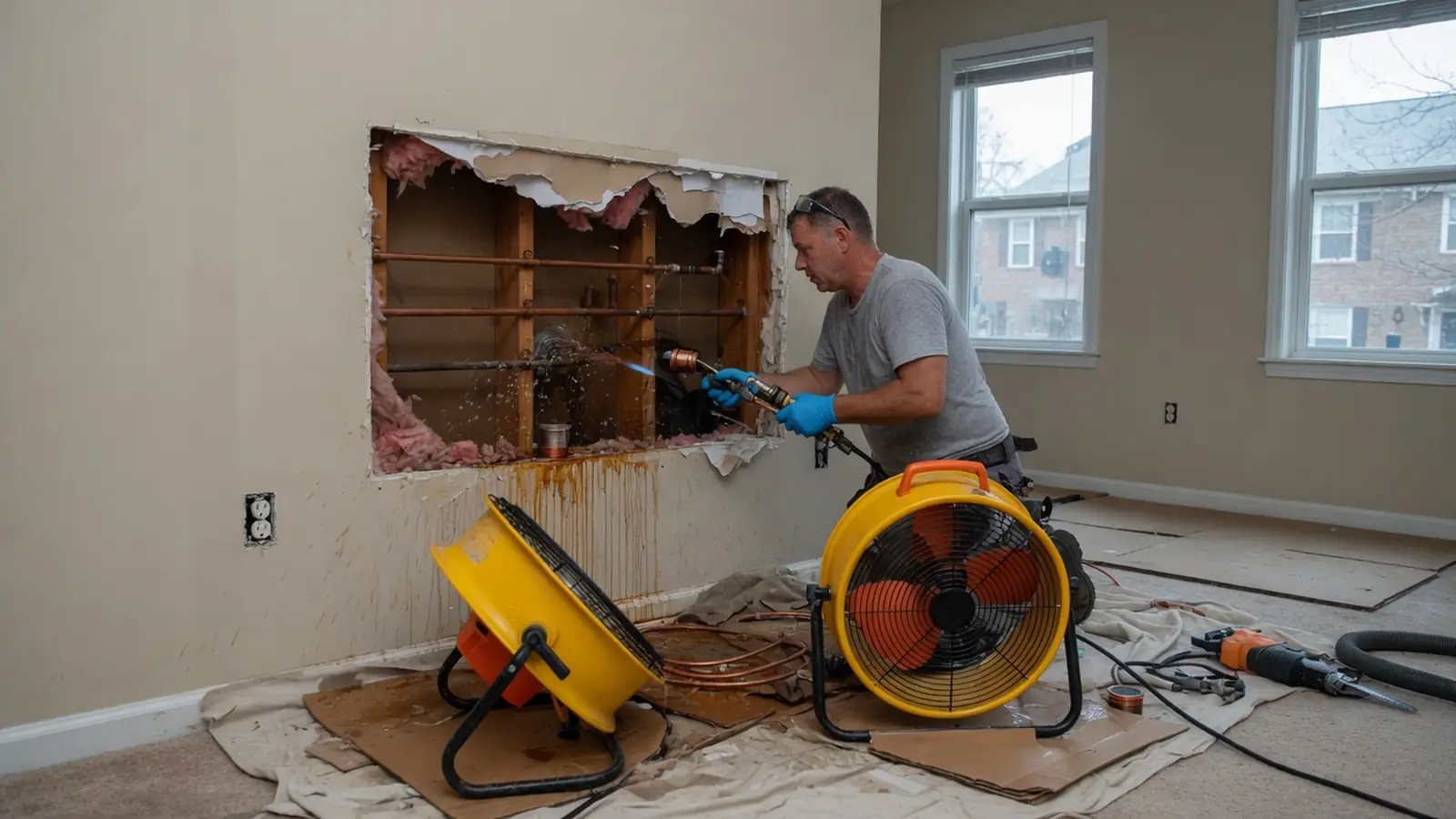
Waco Storm Damage
Violent severe weather and heavy hail can compromise roof decking, flooding ceilings and living rooms within hours. Our dedicated restoration team responds around the clock with commercial water extractors and high-capacity drying systems. We protect your property from structural rot and hazardous mold before hidden moisture spreads.
Call (254) 555-0145 with questions.
Prefer to talk? (254) 555-0145
Local Weather Response Specialists
The regional market has 59,427 housing units on record in the Census ACS 5-year estimates.
The median owner-occupied home in the area was built in 1976 according to Census ACS 5-year data.
About 25% of housing units locally (14,926 of 59,427) were built since 2000, so a substantial share of the local stock is still on its original systems.
Hail activity around this region is uneven year to year: 2024 logged 934 radar signatures while 2021 logged only 287, a 3.3x spread.
Comparing the two halves of 2021-2025 across the area, radar hail signatures went from 644 to 1,323, representing a rise of 105%.
Our technicians deliver comprehensive emergency water extraction and structural drying services when seasonal storms strike residential neighborhoods.
During a recent severe thunderstorm near the Lake corridor, our team stabilized three saturated ceiling cavities using specialized cavity drying injectors before drywall breakdown occurred.
We monitor moisture levels daily with thermal cameras and penetrating moisture meters until framing studs return to normal dry standards.
How We Remediate Severe Storm Damage
As trade documentation highlights, immediate homeowner documentation of water line levels and structural losses is vital to secure disaster relief and municipal recovery resources, so our structured response pairs fast water mitigation with detailed physical logging.
- Damage Triage And Roof Decking Inspection. Our technicians perform an immediate structural inspection to identify overhead intrusion points and map moisture levels throughout ceilings and interior walls. Homeowners often describe how rainwater leaking through roof decking rapidly damages interior ceilings, creating urgency to stop moisture before drywall and insulation rot.
- Rapid Extraction And Bulk Pumping. Homeowners often describe how flash flooding can inundate living areas up to a foot deep within minutes, cutting off internal egress and precluding emergency content pack-outs. Once floodwaters recede, our rapid-response crew deploys high-volume submersible pumps and industrial extractors to clear standing water from carpets, floorboards, and crawl spaces.
- Controlled Demolition And Antimicrobial Wash. Residents coping with flood intrusion face confusion over proper procedures for cutting contaminated drywall, stripping insulation, and structural drying. Our certified technicians establish exact flood cuts above the moisture line, discard saturated batt insulation, and apply botanical antimicrobial treatments. We follow strict containment and professional mold remediation protocols to ensure healthy indoor air.
- Deep Structural Dehumidification. We deploy commercial low-grain refrigerant dehumidifiers and high-velocity axial air movers to extract trapped water vapor from exposed structural framing. Our team logs daily psychrometric readings to verify that relative humidity and moisture content reach balanced dry standards.
Honest Craftsmanship And Local Accountability
Homeowners dealing with sudden storm damage struggle to find reliable local emergency restoration while avoiding predatory out-of-town contractors. We protect our community with transparent documentation, verified moisture readings, and disciplined restoration standards. You can find out how our technicians handle sudden flood cleanup with dependable local accountability.
Ceiling And Roof Leak Mitigation
Rainwater leaking through roof decking rapidly damages interior ceilings, creating urgency to stop moisture before drywall and insulation rot. Our crews secure structural openings immediately and extract water from overhead assemblies. We stabilize saturated framing to prevent structural sagging and mold formation.
Emergency Floodwater Extraction
Sudden overland water requires swift containment to stop contamination from ruining subfloors and baseboards. We deploy truck-mounted extractors and deep-penetration floor vacuums to pull moisture from porous building assemblies. Our process halts structural degradation before secondary rot begins.
Structural Cavity Drying
Water trapped behind plaster or sheetrock weakens wall framing and creates hidden fungal colonies. We use positive and negative air injection systems to circulate warm, dry air through enclosed stud bays. This targeted airflow restores framing without requiring unnecessary wall demolition.
Our Commitment To Rapid Weather Restoration
We maintain emergency mobilization ready around the clock to assist property owners facing sudden weather events. Every project receives rigorous psychrometric monitoring, professional moisture mapping, and honest communication from start to finish.
- 10Zip Codes Served
- 6Service Areas
- 3Services Offered
Local property owners rely on our emergency response crews when severe weather strikes. Read first-person feedback from homeowners whose properties were restored following heavy rains, roof leaks, and high winds.
“When a fallen branch punctured our roof decking during the thunderstorm, debris threatened our shared driveway and the HOA was already asking questions. The crew arrived promptly with protective tarps, positioned their drying trailers without blocking traffic, and explained the cleanup timeline directly to our neighborhood board. Their professionalism defused an otherwise stressful situation with our neighbors immediately.”
Marcus B.
“Six months after severe wind drove rain through our ceiling joints, our living room feels completely normal with zero musty odors or drywall sagging. The team used moisture meters on every stud and verified deep structural drying before closing up the repairs. Living in the space through another rainy cycle gave us complete confidence in their thorough workmanship.”
Clara T.
“Our senior dog gets terrified during loud storms, and having industrial air movers running inside our home was an initial worry. The technicians thoughtfully mapped out safe walking pathways, kept containment barriers closed to prevent escape, and placed cords away from our mother's walker. They treated our family and home with genuine kindness throughout the restoration.”
Julian K.
“Another contractor gave us a rock-bottom estimate, but they admitted they would only place floor fans without opening the soaked insulation cavities. This crew took the time to show me the trapped moisture behind the baseboards and explained why leaving it would rot our framing. Paying for their comprehensive extraction saved us from a massive mold problem down the road.”
Devon R.
Frequently Asked Questions
How quickly should emergency storm damage mitigation begin?
Emergency mitigation should begin immediately within twenty-four hours to extract standing water and stop roof decking leaks before rot sets in. Prompt response prevents moisture from migrating through ceiling drywall into subfloors and structural wall cavities.
What steps are required when floodwater intrudes into living spaces?
Flood response requires extracting water, removing contaminated drywall above the waterline, discarding wet insulation, and deep sanitizing. Residents coping with flood intrusion face confusion over proper procedures for cutting contaminated drywall, stripping insulation, and structural drying, which professional teams execute methodically.
How should homeowners document storm losses for insurance or relief?
Document high water lines and structural losses with date-stamped photos and videos before disposing of saturated carpet or building materials. Immediate homeowner documentation of water line levels and structural losses is vital to secure disaster relief and municipal recovery resources.
Does homeowner insurance cover storm damage water extraction?
Most standard policies cover sudden wind or roof puncture damage, while rising groundwater typically requires dedicated flood insurance riders. Detailed itemized moisture mapping logs provided by certified technicians substantiate your claim to insurance adjusters directly.
How long does structural drying take after storm water intrusion?
Complete structural drying generally takes three to five days using industrial dehumidifiers, air movers, and routine moisture meter readings. Thorough drying ensures timber framing and wall cavities reach baseline moisture levels prior to drywall replacement and repainting.